Closing the Field Service Transparency Gap

Facility managers and restaurant operators know the anxiety of receiving a vague, expensive maintenance invoice. You approve the payment because you need the equipment running, but the question remains: did the technician actually do the job correctly, and can you prove it?

For years, commercial field service has had blind spots that leave clients and service providers alike frustrated. Clients feel vulnerable to inflated hours and unverified repair work, while honest service providers feel the brunt of concerned, cost-sensitive clients. It all comes down to a lack of transparency.

The fix is simple: more transparency = more trust.

The true cost of the transparency gap

There are three questions that clients have when there is a lack of transparency.

1. How much of the time I’m paying for was spent on the repair?

If a technician arrived late, spent half the billable time sitting in their van, or left the site without communicating with a manager, clients get suspicious.

2. How do I know this was actually done?

Having no line-of-sight into whether a component was genuinely replaced, cleaned, or simply turned off and on again leaves clients guessing about thoroughness.

3. What am I actually paying for?

Clients will struggle to justify maintenance spend to corporate finance teams or auditors when there is no physical or digital evidence attached to the expense.

When facility operations rely on paper trails, disjointed communication apps or simply the technician’s word (without evidence to back it up), accountability and trust breaks down.
How does mendrhub close the field service transparency gap?

Closing the gap requires a move away from verbal promises to a data-driven workflow that keeps everyone accountable and the process transparent. Mendrhub replaces doubt with undeniable proof by building verification directly into the workflow. This looks like:

Kiosk login for verifiable on-site presence

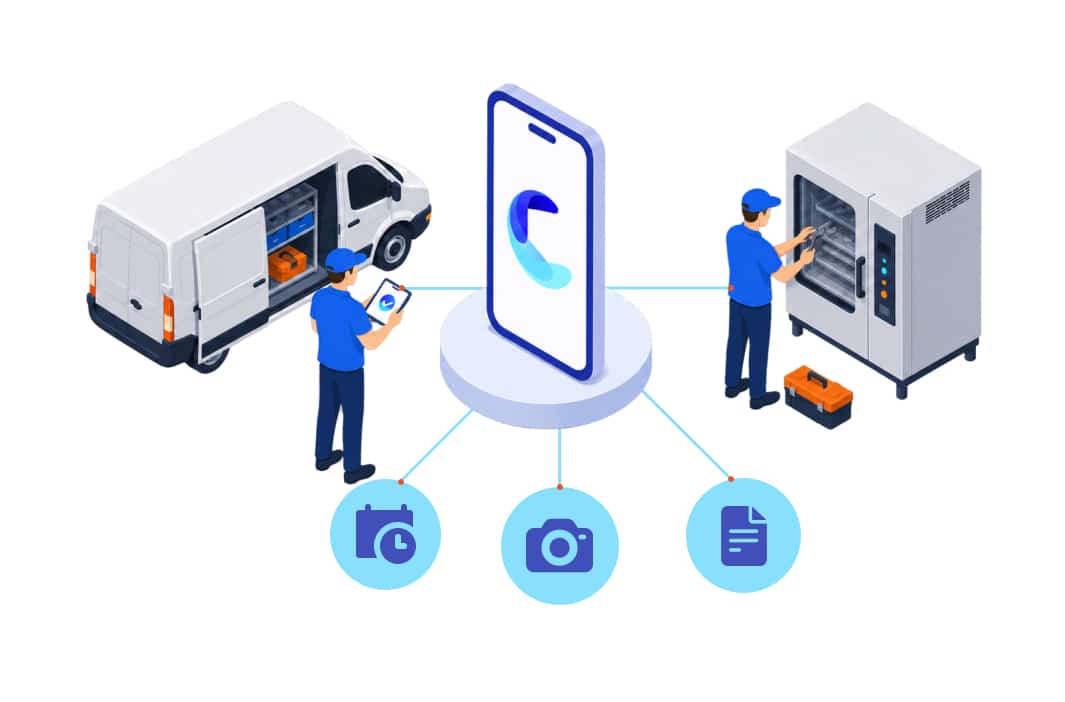
Upon arrival, technicians must digitally check in on-site through mendrhub’s integrated Kiosk system. This creates an unalterable, geofenced, and timestamped record of exactly when the provider stepped into your kitchen and when they checked out. Clients only pay for active, verified time on-site.

Photo records for visual evidence

A detailed invoice description is good, but a visual record is irrefutable. Our system can optionally or mandatorily require technicians to log before-and-after photo records directly within the asset portal before a work order can be finalised. It means that if a technician claims a refrigeration fan motor required a full replacement, you’ll have a photo of the degraded component alongside the newly installed part – securely archived against that specific machine’s history.

Detailed digital records for itemisation

Mendrhub standardises reporting by generating detailed digital records for every service call, available at a moment’s notice for any future audits. Every single detail of the repair and the asset is recorded and stored in a centralised database, and permanently attached to the specific asset’s serial number and complete job history.

Digital billing and quote approval

Complete job records are great, but a job is only ever finalised once an invoice has been sent by the provider and paid by the client. Mendrhub digitises quoting and billing, making it easier than ever for suppliers to invoice for the exact work they have logged, while clients can review, approve, or reject and query quotes and invoices that don’t match up, without the need for lengthy email exchanges and with a papertrail kept fully transparent to all parties.
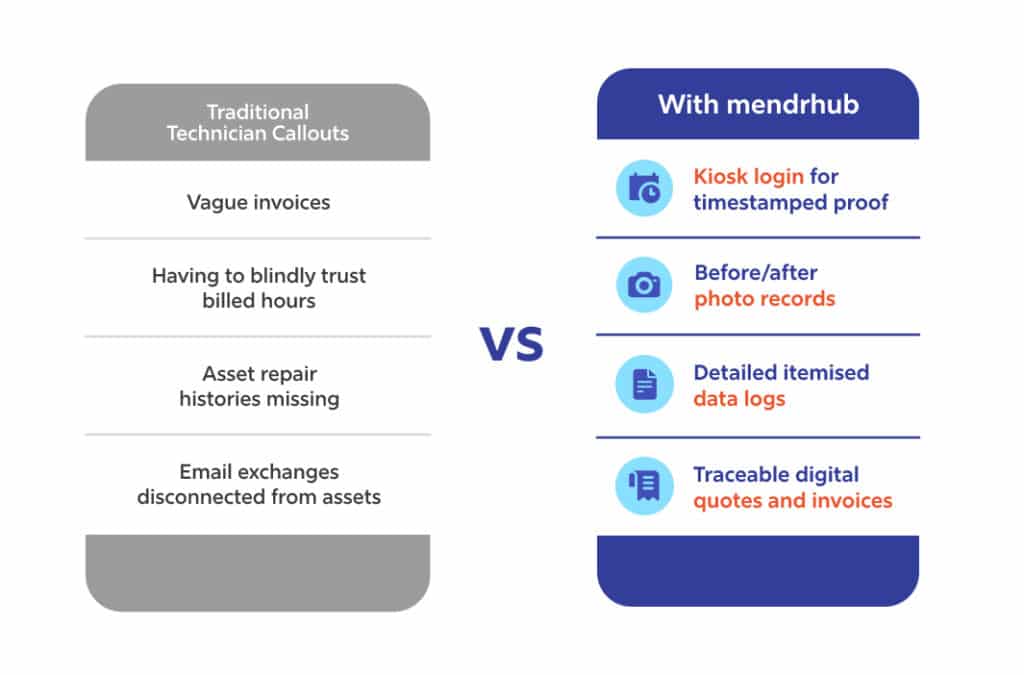
Traditional Technician Callouts VS with mendrhub
Vague invoices VS Kiosk login for timestamped proof
Having to blindly trust billed hours VS Before/after photo records
Asset repair histories missing VS Detailed itemised data logs
Email exchanges disconnected from assets VS Traceable digital quotes and invoices

The most important data-driven asset in field service? Trust.

True transparency in field service is a win for both clients and service providers. When high-quality technicians know their efficiency, skill, and accuracy are being captured accurately, it proves their value – and gives operators the confidence to build long-term, stress-free relationships with their service providers. 

By eliminating guesswork with an integrated asset and facility management system like mendrhub, field service repairs become a partnership, not a fight.
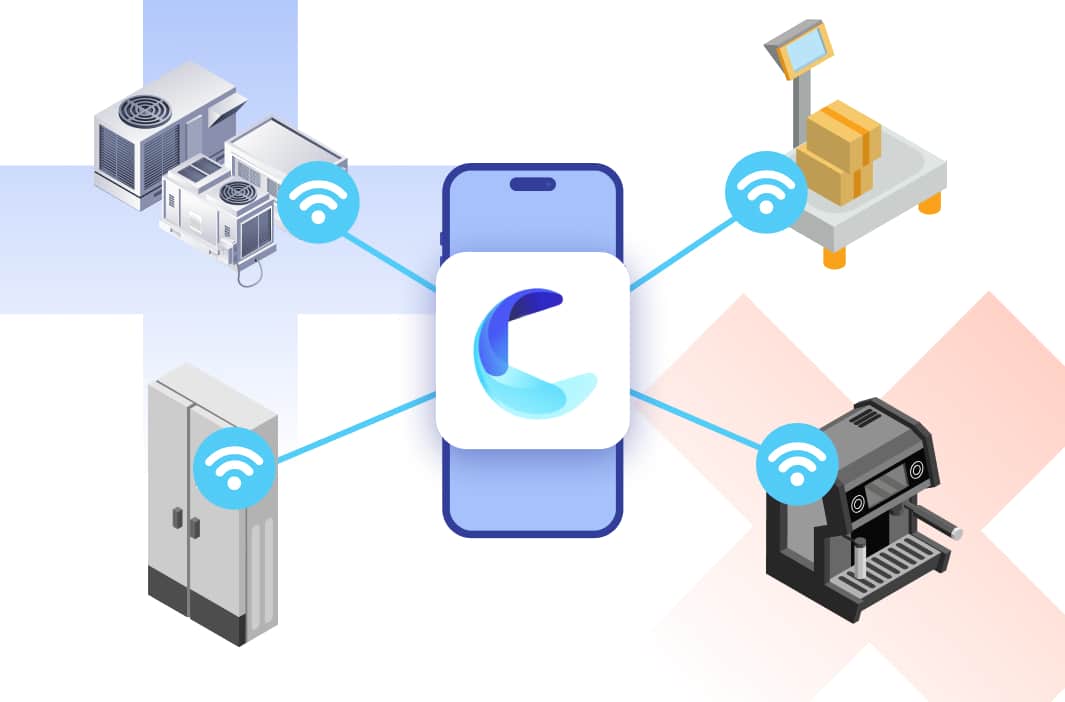

IoT Connected Devices: The Pros & Cons

The promise of the Internet of Things (IoT) is enticing. Every commercial fridge, HVAC unit or coffee machine can flag its own maintenance needs, monitor its energy consumption, and make repair vs. replace decisions simple. However, as facility and asset managers know, the transition to an entirely smart ecosystem isn’t always smooth. The benefits are exciting, but the reality of IoT often involves a steep learning curve and adequate investment of time and money.

The Pros of IoT-Enabled Assets

When IoT works well, it completely changes the way businesses operate. The benefits include:

  • Predictive maintenance: IoT-enabled assets are able to preempt breakdowns based on data, moving maintenance from reactive to proactive.
  • Process automation: Continuous, automated monitoring – like logging refrigeration temperatures – cuts out human error and guarantees compliance.
  • Total visibility: IoT-connected assets allow businesses to accurately track uptime and see how much energy each individual asset is using so you can better identify inefficiencies.

The Cons of IoT-Enabled Assets

The benefits of IoT across your assets are clear. However, deploying IoT across a multi-site organisation has its hurdles, including:

  • Technical complexity: As with any new technology, implementing different sensor hardware, integrating datastreams with a central platform and managing connectivity drops can be a challenge for internal IT and operational teams. Rolling-out IoT devices alongside an asset management system must be carefully planned out and supported by experts.
  • Upfront costs: Retrofitting existing equipment with IoT sensors or procuring brand new smart equipment comes at a cost. While the payoff can be priceless, the initial investment must be carefully considered.
  • Data actionability: With so much data on hand, without building the appropriate workflows to action the trends and issues your data raises, all you are left with is noise. A sensor telling you a machine is overheating doesn’t help if the alert is going to an unmonitored inbox.


How mendrhub helps bridge the gap

You shouldn’t need to choose between your existing manual operations and an expensive equipment overhaul. Regardless of where your business is at on your IoT journey, asset management software like mendrhub acts as an intelligent layer to optimise your operations.

If you DON’T have connected devices

Even without IoT-enabled assets, mendrhub can help fill the data gaps that IoT normally addresses, like:

  • Whole-of-life costs: By tracking an asset from purchase to decommission, mendrhub gives you total clarity over equipment ROI.
  • Data transparency: Get a complete, digital audit trail of everything from service histories to logistics movements across every location.
  • Automated workflows: From preventative maintenance scheduling and smart system alerts to automated job offers, mendrhub allows you to automate workflows regardless of IoT capabilities.

If you DO have connected devices

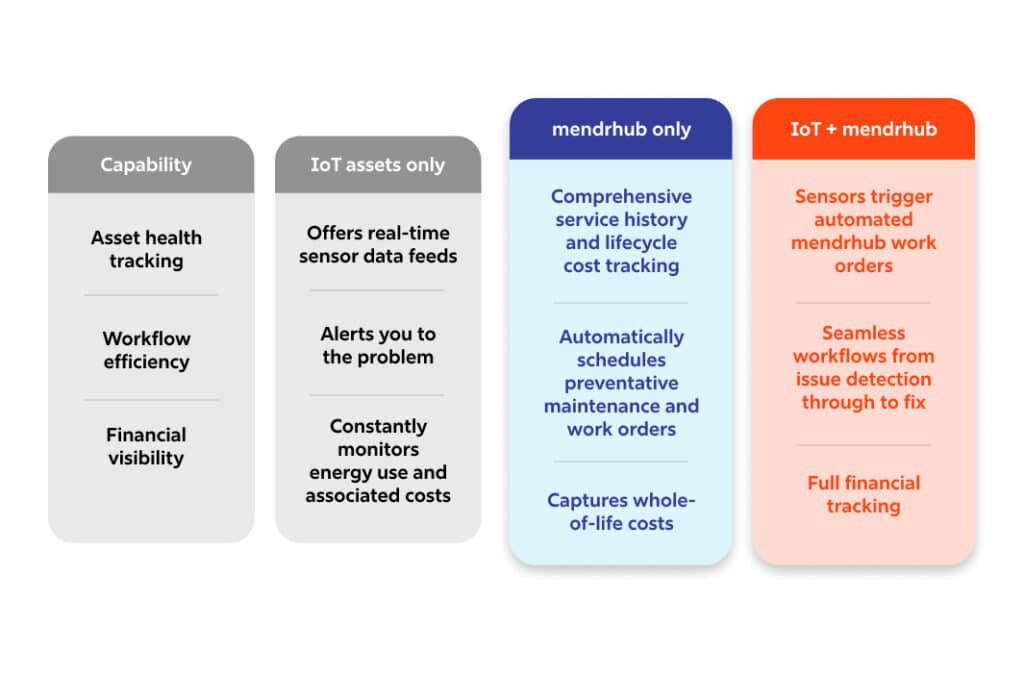
With IoT assets in place, mendrhub helps solve two of IoT’s biggest cons – by minimising technical complexity and actioning your data. As a partner, mendrhub will provide full support, helping you integrate your IoT datastreams into your central mendrhub web portal. Once integrated, mendrhub can automate workflows and notifications so in the event that an IoT device triggers an alert (e.g. a refrigeration temperature drop) mendrhub can take that data and create a work order, instantly sending it to the right technician or alerting the right manager. In addition, long-term trends across your assets and sites can not just be monitored and reported on but also visualised using the power of embedded and drillable Power BI dashboards.

IoT vs. mendrhub: What does it look like in practice?

To wrap up

You don’t need to replace every unit of equipment immediately in order to start creating a more data-driven way of working. Whether you choose to implement IoT, an asset management system, or both, you can still access the benefits of workflow automation, improved data transparency and actionable alerts. The first step is understanding your business’ existing capabilities and needs – then taking it from there.

Cookie Notice

When you visit any website, it may store or retrieve information on your browser, mostly in the form of cookies. This information might be about you, your preferences or your device and is mostly used to make the site work as you expect it to. The information does not usually directly identify you, but it can give you a more personalized web experience.

More Information

Manage Consent Preferences

Strictly Necessary Cookies

These cookies are necessary for the website to function and cannot be switched off in our systems. They are usually only set in response to actions made by you which amount to a request for services, such as setting your privacy preferences, logging in or filling in forms. You can set your browser to block or alert you about these cookies, but some parts of the site will not then work. These cookies do not store any information that directly identify an individual.

Always Active

These cookies allow us to count visits and traffic sources so we can measure and improve the performance of our website. They help us to know which pages are the most and least popular and see how visitors move around the website. If you do not allow these cookies we will not know when you have visited our website and will not be able to monitor its performance.

Always Active

These cookies enable the website to provide enhanced functionality and personalization. They may be set by us or by third party providers whose services we have added to our pages. If you do not allow these cookies, then some or all of these services may not function properly.

Always Active

This website uses cookies to ensure you get the best experience