
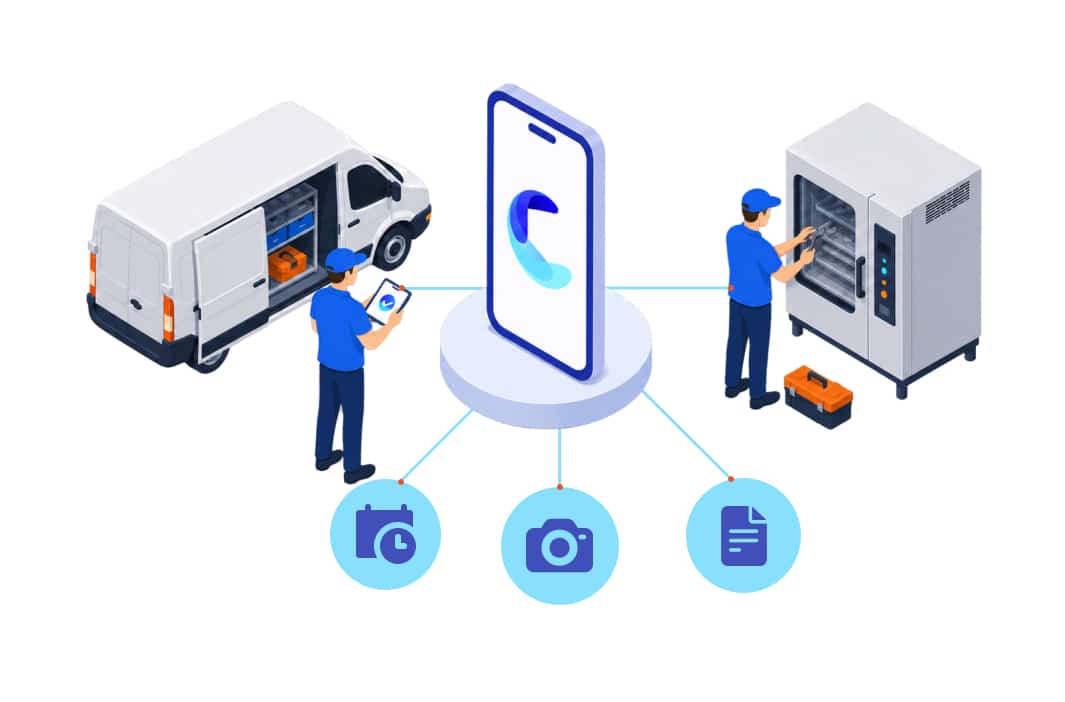
Facility managers and restaurant operators know the anxiety of receiving a vague, expensive maintenance invoice. You approve the payment because you need the equipment running, but the question remains: did the technician actually do the job correctly, and can you prove it?
For years, commercial field service has had blind spots that leave clients and service providers alike frustrated. Clients feel vulnerable to inflated hours and unverified repair work, while honest service providers feel the brunt of concerned, cost-sensitive clients. It all comes down to a lack of transparency.
The fix is simple: more transparency = more trust.
The true cost of the transparency gap
There are three questions that clients have when there is a lack of transparency.
1. How much of the time I’m paying for was spent on the repair?
If a technician arrived late, spent half the billable time sitting in their van, or left the site without communicating with a manager, clients get suspicious.
2. How do I know this was actually done?
Having no line-of-sight into whether a component was genuinely replaced, cleaned, or simply turned off and on again leaves clients guessing about thoroughness.
3. What am I actually paying for?
Clients will struggle to justify maintenance spend to corporate finance teams or auditors when there is no physical or digital evidence attached to the expense.
When facility operations rely on paper trails, disjointed communication apps or simply the technician’s word (without evidence to back it up), accountability and trust breaks down.
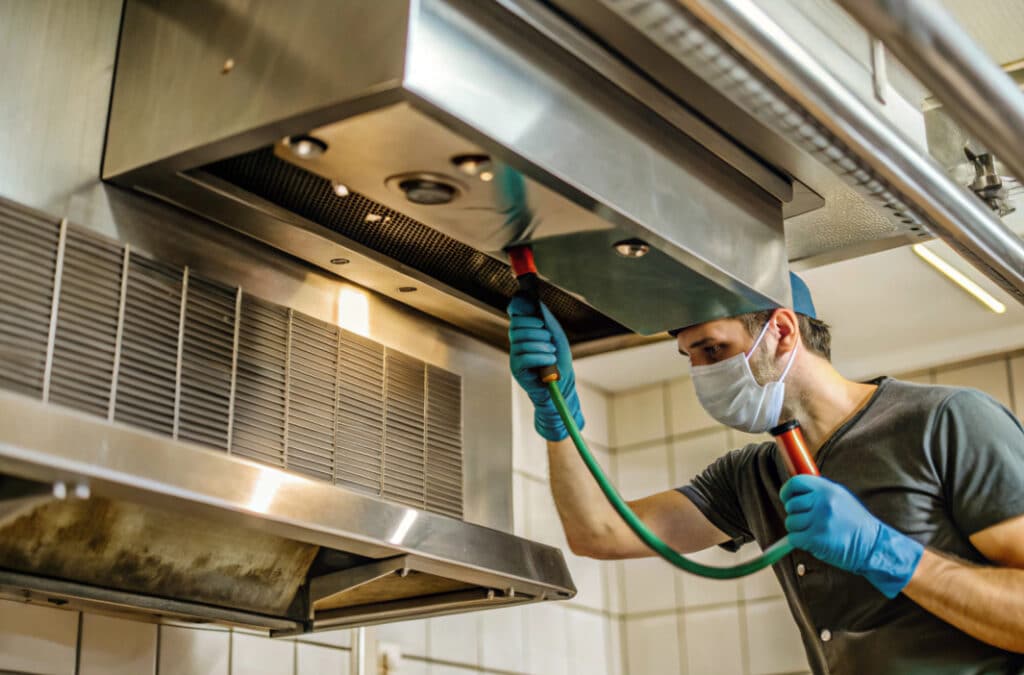
How does mendrhub close the field service transparency gap?
Closing the gap requires a move away from verbal promises to a data-driven workflow that keeps everyone accountable and the process transparent. Mendrhub replaces doubt with undeniable proof by building verification directly into the workflow. This looks like:
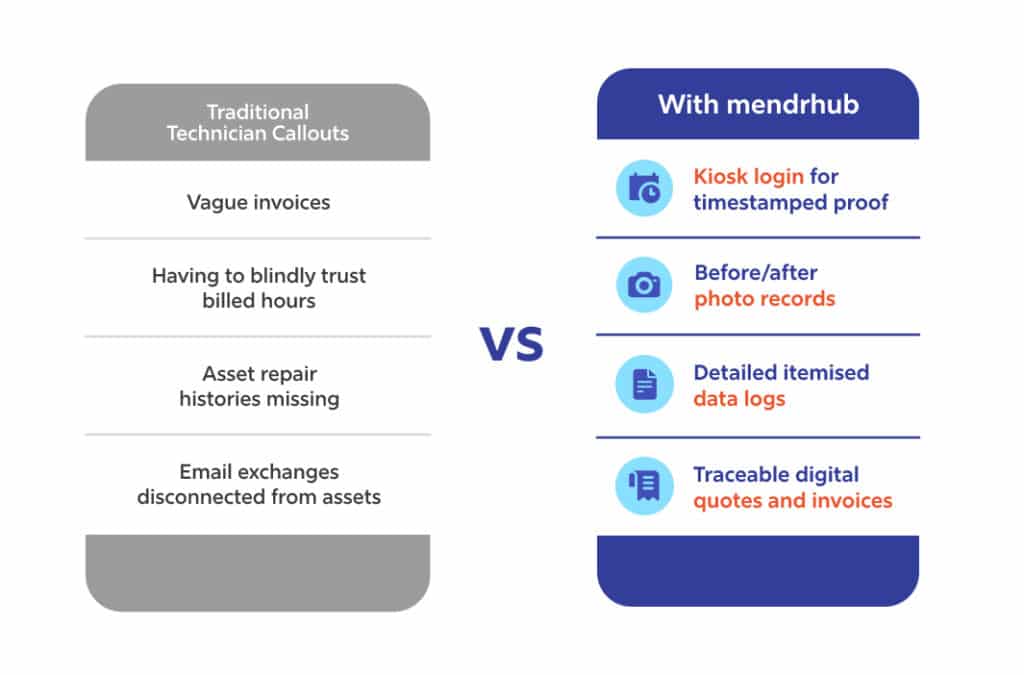
Kiosk login for verifiable on-site presence
Upon arrival, technicians must digitally check in on-site through mendrhub’s integrated Kiosk system. This creates an unalterable, geofenced, and timestamped record of exactly when the provider stepped into your kitchen and when they checked out. Clients only pay for active, verified time on-site.
Photo records for visual evidence
A detailed invoice description is good, but a visual record is irrefutable. Our system can optionally or mandatorily require technicians to log before-and-after photo records directly within the asset portal before a work order can be finalised. It means that if a technician claims a refrigeration fan motor required a full replacement, you’ll have a photo of the degraded component alongside the newly installed part – securely archived against that specific machine’s history.
Detailed digital records for itemisation
Mendrhub standardises reporting by generating detailed digital records for every service call, available at a moment’s notice for any future audits. Every single detail of the repair and the asset is recorded and stored in a centralised database, and permanently attached to the specific asset’s serial number and complete job history.
Digital billing and quote approval
Complete job records are great, but a job is only ever finalised once an invoice has been sent by the provider and paid by the client. Mendrhub digitises quoting and billing, making it easier than ever for suppliers to invoice for the exact work they have logged, while clients can review, approve, or reject and query quotes and invoices that don’t match up, without the need for lengthy email exchanges and with a papertrail kept fully transparent to all parties.
The most important data-driven asset in field service? Trust.
True transparency in field service is a win for both clients and service providers. When high-quality technicians know their efficiency, skill, and accuracy are being captured accurately, it proves their value – and gives operators the confidence to build long-term, stress-free relationships with their service providers.
By eliminating guesswork with an integrated asset and facility management system like mendrhub, field service repairs become a partnership, not a fight.