The Future of Asset Management: Insights from mendrhub’s Founder on AI, Data and Smarter Decisions

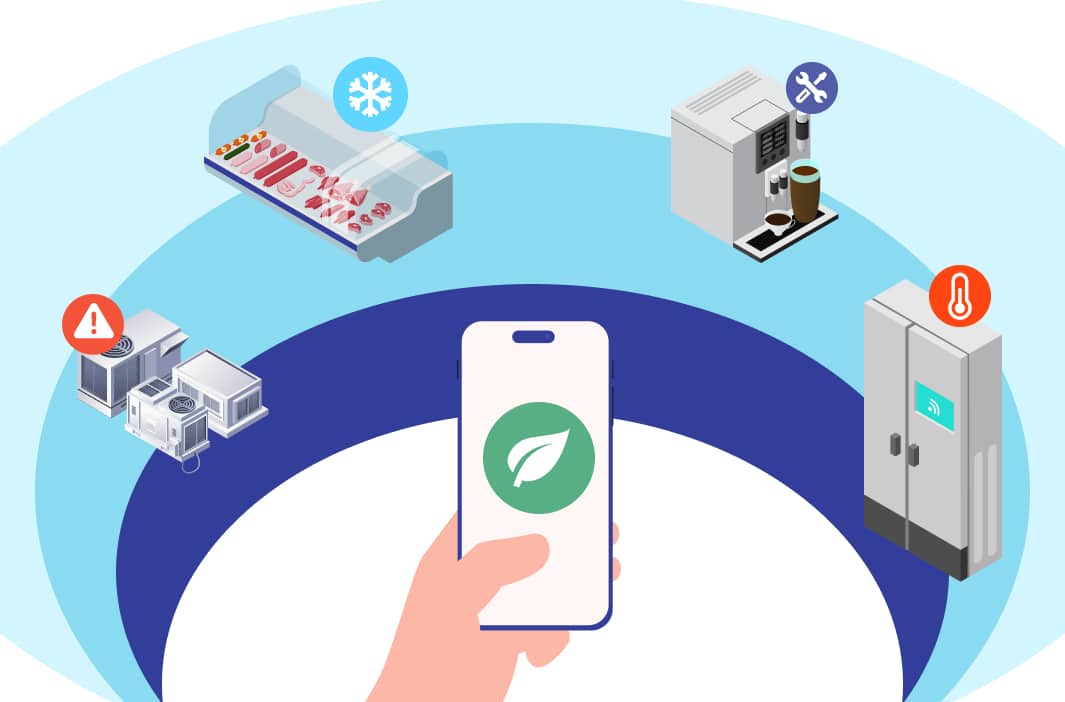
As AI continues to rapidly speed up what’s possible for asset-centric platforms, businesses are increasingly moving away from reactive servicing and towards intelligent decision-making. But according to mendrhub founder, Glen Barkhan, the future of asset management isn’t just automation, dashboards or predictive maintenance.

It comes down to one thing: data, and what organisations do with it.

Data as a core driver of business decisions

Collecting data isn’t a new concept for most organisations. However, analysing it previously required specialist expertise and significant manual effort. It would take a data analyst days or weeks to extract useful insights from sources like service histories or downtime reports – something that AI can now do in a fraction of the time.

This doesn’t mean that AI will replace analysts. Instead, AI can handle the “grunt work” while analysts use their expertise to interpret the actionable insights. As Glen explains, “The key word with all clients is data, and being able to use that data to identify historical trends and predict what will happen in the future.”

For asset management, it means a shift from simple record-keeping to in-depth analysis and forecasting.


Data-capture intelligence

Modern asset platforms are becoming increasingly intelligent in the way they capture data. Whereas previously a technician would simply log that they replaced a thermostat, systems can now record asset-specific details like:

  • the exact model
  • the specific serial number
  • the compatible part used
  • the performance outcome

This matters because each asset behaves differently. Even identical machines operating in different environments or used differently by staff will experience different wear patterns and issues. Smart asset-centric systems now offer detailed serial-level tracking that helps organisations understand failure trends, identify weak components and improve first-time-fix rates.

Uptime as a financial metric

Asset uptime has long been considered an engineering KPI. Now, with broader data available through modern asset platforms, organisations can combine downtime duration with transaction volumes and performance data to estimate the financial impact of equipment failures. The future of asset management will see uptime become a revenue metric – not just an engineering one.

In practice, it means if a key machine fails across multiple restaurant locations, the asset management system can provide an estimate for how much revenue is potentially lost during the downtime. Multiply this across hundreds of sites, thousands of assets and multiple failure events, the financial impact of downtime is clear.

This is where asset management becomes business strategy.

How AI will shape the future of asset management

AI-powered tools are now capable of everything from identifying equipment faults before they happen to capturing vast amounts of data instantly. For example, mendrhub’s asset auditing capability uses AI to capture serial code information automatically, reducing work that previously took days or weeks into a much faster process.

It’s an exciting leap ahead for asset management innovation, but the question remains: what does AI mean for jobs?

According to Glen, the shift is already underway.

“The reality is that over time, jobs change. There will be plenty of opportunities to upskill as AI becomes more prevalent, which I think is important – so you don’t risk being left behind.”

But Glen still believes that one of the biggest misconceptions about AI in asset management is that it will completely replace human expertise.

“It doesn’t necessarily replace humans. It becomes an enabling tool to allow them to do tasks quicker. This means that smart business operators can grow without a corresponding increase in overhead.”

The future of asset management is predictive and insight-led

As we look ahead, Glen predicts that the organisations that will succeed are the ones taking advantage of smart asset management platforms that are:

  • Data-rich
  • AI and automation enabled
  • Model-aware
  • Uptime-focused

Organisations that can capture detailed asset data and predict performance will reduce downtime, have happier customers and enjoy the boost to their bottom line. Because the future of asset management isn’t just about getting things done faster – it’s about understanding each asset enough to prevent failure before it happens.

What is OCR (Optical Character Recognition) & How Does It Work?

As workplaces evolve with new technologies and with automation becoming the norm, manual data entry is no longer a sustainable work process. That’s why OCR (Optical Character Recognition) has become such a powerful tool. This not-so-new technology is changing the way businesses operate and increasingly saving them time and money. Let’s take a look at what it is, where it came from, and why it can help your business.

What is OCR?

OCR or Optical Character Recognition, is a technology that automatically extracts data to convert printed text or images of text into a machine-readable format. This means that images of invoices or PDF’s can be read by a computer and digitised, with different sections of the invoice identified to instantly match relevant data to a purchase order or a job, saving countless hours of admin time. You can also scan and instantly digitise text from:

  • Receipts
  • Delivery dockets
  • Contracts
  • Maintenance reports
  • Compliance forms

How does OCR work?

OCR software requires either a digital document such as a PDF or a digital image to be able to process text. Thankfully, we all have access to a quick way to digitise information via our smartphone cameras! The actual OCR processing involves multiple steps including:

  • Image acquisition – the OCR program identifies dark areas as characters to recognise and light areas as background
  • Preprocessing – the digital image is stripped to remove extra, irrelevant pixels
  • Text recognition – the darker parts of the image are processed to look for alphabetic letters, symbols or numbers
  • Pattern recognition – the OCR software is previously trained on text in specific fonts and formats
  • Feature recognition – when analysing a font that the OCR software hasn’t been trained on, it will look for rules relating to the features of a specific letter or number to recognise the characters
  • Layout recognition – the OCR software will analyse the entire structure of a document and divide it into elements like blocks of text or tables
  • Postprocessing – the gathered data is stored as a structured and editable digital file, which can then have the specific data you want sent through to

How has OCR evolved?

OCR has been around for more than a century, but the technology has changed dramatically over time. What started as a way to recognise simple printed characters has evolved into intelligent software that can extract, interpret and route information from complex business documents.

1. Early experiments

The earliest OCR-like systems appeared in the early 20th century. These were mechanical and optical devices designed to recognise typed or printed characters. They were limited, experimental and usually required very specific fonts or document formats to work reliably.

2. Commercial OCR

By the 1950s and 1960s, OCR began to be used commercially, particularly in banking, government and large-scale administration. These systems could read clearly printed text, but they usually relied on standardised fonts and highly structured documents. They were useful, but not flexible.

3. Digital OCR

From the 1990s onwards, OCR became widely available through desktop scanners, document management systems and searchable PDFs. Businesses could digitise paper records, search document archives and extract basic information from forms, invoices and reports. This made OCR much more practical for automation and everyday office use.

AI-powered OCR

Today’s OCR systems use artificial intelligence, machine learning and, increasingly, large language models to do much more than recognise characters. Modern OCR can identify document types, understand context, extract key fields, read tables, handle different layouts and validate information against business systems. This means OCR is no longer just about turning images into text — it is becoming part of broader document automation and intelligent workflow systems.

What can modern OCR actually read?

For most businesses, the important thing to understand is what an OCR system can actually do with your documents.

Basic OCR reads printed text from an image or scanned document and turns it into editable, searchable text. This is useful for digitising paper records, making PDFs searchable, or extracting simple information from clean, standardised documents.

More advanced OCR can recognise handwriting, checkboxes, tables, forms, logos, signatures and document layouts. This is useful for invoices, delivery dockets, maintenance reports, compliance forms and other documents where the information is not always presented in the same way.

Finally intelligent OCR goes a step further. Instead of simply reading text, it can help identify what the document is, where the important information sits, and how that information should be used. For example, an intelligent OCR system might read an invoice, identify the supplier, extract the invoice number and total, match it to a purchase order, and send the information into the right workflow for approval or payment.

What are the benefits of OCR?

OCR can deliver significant benefits for businesses that still rely on emailed documents, manual data entry or paper records:

Less manual data entry

One of the biggest advantages of OCR is that it reduces the need for people to manually type information from invoices, forms, receipts or reports into another system. This saves time, lowers admin costs and frees staff to focus on higher-value work.

Fewer errors

Manual data entry is slow and prone to mistakes. OCR can help reduce errors by extracting information directly from the source document and applying validation rules, such as checking invoice details against a purchase order or matching a job number to an existing record.

Faster document processing

OCR can speed up processes that rely on paperwork, such as invoice approval, job matching, asset registration, compliance reporting or warranty claims. Instead of waiting for someone to read and enter the information manually, documents can be scanned, read and routed automatically.

Searchable digital records

OCR makes scanned documents searchable. This means teams can quickly find an invoice, contract, delivery docket, maintenance report or compliance form by searching for a supplier name, job number, asset number or keyword.

Better visibility and reporting

Once information has been extracted from documents, it can be used in dashboards, reports and business systems. This gives teams better visibility over operations, costs, jobs, assets and compliance requirements.

Easier automation

OCR is often the first step in a broader automation workflow. Once a system can read and understand a document, it can trigger the next action — such as matching an invoice to a job, sending a form for approval, updating an asset record, or notifying the right team member.

To Wrap Up

For businesses dealing with high volumes of invoices, forms, reports or service documents, OCR can make everyday operations faster, more accurate and easier to manage.

OCR certainly isn’t a new technology, but as it continues to evolve, it continues to make manual data processing a practice of the past. With its numerous benefits and potential to increase productivity and profitability, it’s no wonder that so many companies are already on board – including us.

Intelligent OCR technology is integrated into our system to learn the custom format of invoices and instantly match any relevant data to a certain job. It automates billing and saves on admin hours, so we can say with certainty that this technology is worth looking into.

5 Reasons Why Asset Management Software Is Essential for Foodservice Equipment Manufacturers

Asset Management Software

In the highly competitive world of foodservice equipment manufacturing, staying ahead of the curve is crucial to your success. Asset management software is a niche solution that has managed to completely revolutionise the industry, and we have first-hand experience of just how potent it can be when implemented for equipment manufacturers serving the fast-paced foodservice and beverage industries.

These are the key reasons why.

1. Continuous product improvement

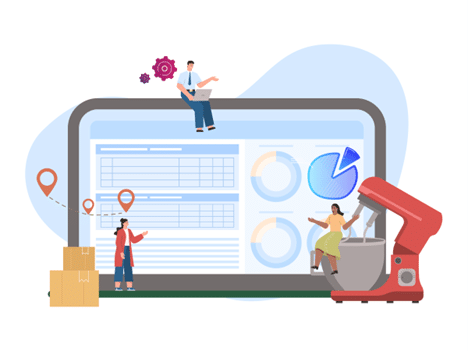
When visualised through interactive dashboards, the detailed data and insights provided by an asset management platform allow you to identify critical business and product trends. This helps you close the loop when tracking equipment performance, empowering you to make decisions that can ultimately save your business money and keep your customers happy.

With a clear picture of equipment performance, you can understand the types of faults that occur, feeding this back to the factory and creating a virtuous cycle of product improvement and quality control. This data can also be used to implement optimised preventative maintenance schedules and digital self-help troubleshooting, extending the lifespan of your customers equipment and minimising downtime.

Ensuring your platform of choice works seamlessly with IoT (Internet of Things) devices allows your after-sales servicing to become truly proactive. With data flowing in real-time, your decision making power can improve exponentially while service requests can be set to auto-trigger before a breakdown occurs.

2. Complete control over your supply chain

One of the great benefits of asset management software is the complete visibility it provides over everything from product shipments to warehousing, part inventory, order fulfilment and servicing. This kind of visibility means you can quickly identify areas to reduce waste, cut operational costs, and improve your overall production planning. The result is a leaner and more cost-effective production process.

By tracking not just the detailed activities taking place across the supply chain, but also the costs incurred, asset management platforms become a critical tool for managing your suppliers and taking control of costs across the supply chain. By allowing you to set up supplier rates you can create powerful opportunities for automating service and billing.

Other handy features that enhance your control include the ability to track service providers performance against SLA’s (Service Level Agreements), cost and attendance efficiency, as well as managing parts and part suppliers and setting up automated stock reorder points to ensure key parts are always on hand.

3. Business risk mitigation

If you sell equipment to the foodservice industry, you’ll know just how important compliance with industry regulations and standards is. You’ll likely also know how much time it takes to manage compliance week in and week out. Asset management software simplifies compliance by providing accurate records of all service activities that have taken place. You can specify mandatory insurances and accreditations that your contractors will be auto-notified to keep updated.

When a new request comes through, the system will ensure that jobs will only be assigned to compliant contractors. This system capability provides the documentation you need for audits and regulatory inspections, reducing the risk of penalties and legal issues.

Software like mendrhub can further help manage business risk with other standout features including:

  • Compulsory sign-in and sign-off digital checklists for your contractors to complete, mitigating OH&S risks.
  • Digital on-site sign off from client contacts to confirm work has been completed.
  • Real-time tracking of time on site
  • Detailed tech specs and explosion diagrams arming your service providers with all the info they need to complete their job successfully.
  • Capturing proof of purchase for you end user warranty registration to minimise the risk of false claims.
  • Photographic evidence captured during warranty service to support or refute warranty claims.

4. Improved customer experience

In the fast-paced world of foodservice equipment manufacturing, customer experience is the key to success and what will set you apart from competitors. The best asset management software will also provide your customers with the ability to register their equipment for warranty directly from an embedded page on your website or from your own custom branded app that your customers can be prompted to download onto their smartphone. These powerful tools extend to after-sales servicing where customers can lodge warranty and out-of-warranty requests directly from a custom branded app or via an embedded service request web page.

With these requests integrated directly into your asset management platform, such value-adding tools not only simplify things for your customers and save them time, but have the added benefit of saving your service team from such time consuming tasks as fielding calls and managing emails.

Asset management software allows for accurate warranty tracking plus automatic setting of warranty periods upon asset registration, which keeps things seamless for customers. On top of this, customers can also use these platforms for case management to lodge support tickets, receive real-time notifications on their service request progress, and utilise QR codes included on their assets for quick registration, troubleshooting and servicing.

5. Simplified billing

Asset management software takes the manual labour out of billing, and it’s easily able to invoice customers for product and part sales as well as out-of-warranty servicing. You can set up rules to ensure markups on customer invoicing are applied automatically, set up cost limits and service provider rates for straight through processing, and utilise OCR and automatic digitisation to simplify supplier invoicing.

Some platforms such as mendrhub will also instantly integrate with common accounting platforms like Xero and MYOB, meaning that once invoices are approved you don’t need to think about billing again.

In an industry as competitive as foodservice equipment manufacturing, investing in an asset management system is the best move you can make for long-term success. From live dashboards to inventory management, make sure you take the steps today to help you operate strategically, streamline your processes and free up your valuable time.

Cookie Notice

When you visit any website, it may store or retrieve information on your browser, mostly in the form of cookies. This information might be about you, your preferences or your device and is mostly used to make the site work as you expect it to. The information does not usually directly identify you, but it can give you a more personalized web experience.

More Information

Manage Consent Preferences

Strictly Necessary Cookies

These cookies are necessary for the website to function and cannot be switched off in our systems. They are usually only set in response to actions made by you which amount to a request for services, such as setting your privacy preferences, logging in or filling in forms. You can set your browser to block or alert you about these cookies, but some parts of the site will not then work. These cookies do not store any information that directly identify an individual.

Always Active

These cookies allow us to count visits and traffic sources so we can measure and improve the performance of our website. They help us to know which pages are the most and least popular and see how visitors move around the website. If you do not allow these cookies we will not know when you have visited our website and will not be able to monitor its performance.

Always Active

These cookies enable the website to provide enhanced functionality and personalization. They may be set by us or by third party providers whose services we have added to our pages. If you do not allow these cookies, then some or all of these services may not function properly.

Always Active

This website uses cookies to ensure you get the best experience