
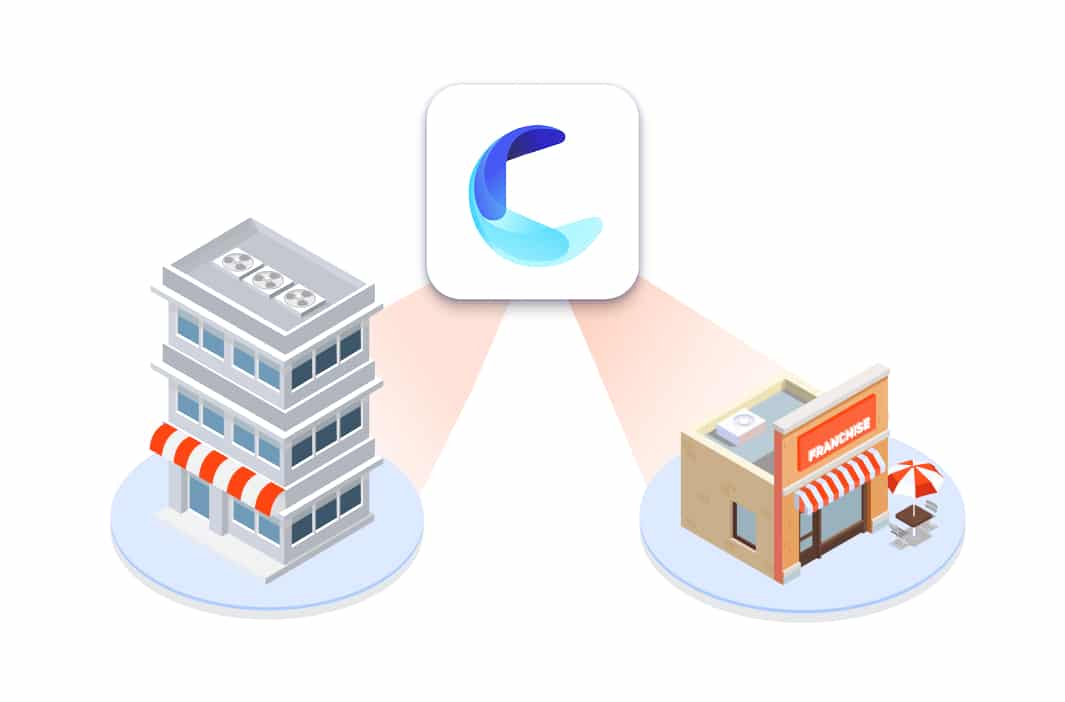
All successful franchise networks require two things – the rigid consistency of the franchisor and the independent drive of individual franchisees. However, balancing the needs of each party can feel like a game of tug-of-war when it comes to facility and asset management.
The answer to striking this balance between franchisor and franchisee isn’t a heavy-handed corporate crackdown. From our experience, franchises that get this relationship right have a single, comprehensive asset management system in place across all locations.

Standardisation vs. Local Margins
When a franchise network lacks a centralised facility management platform, an operational disconnect occurs. Say, for example, a critical piece of kitchen equipment breaks down.
Corporate sees a high-value asset and a large capital investment. They only want authorised, certified technicians servicing it to protect the warranty and ensure food safety compliance.
The store owner sees an unexpected equipment breakdown as a direct threat to their immediate cash flow. If there’s no simple way to get in a corporate-certified technician, they’ll likely call the local handyman who can do it on the cheap.
The result?
An unvetted contractor using non-genuine parts or performing uncertified work can instantly void a several-thousand-dollar manufacturer’s warranty. When the machine inevitably suffers a catastrophic failure three months later, the corporate office loses a standardised asset, and the franchisee is hit with a massive replacement bill.

What is the solution?
The answer in this case is never to strip autonomy away from store owners. Instead, franchisors can provide a system that sets franchisees up for success.
A comprehensive asset and facility management system that can handle both franchisee and corporate facilities is the clear way to balance corporate governance with local operational autonomy. It does this by:
1. Protecting warranties
An asset management system like mendrhub contains the entire service history of every piece of equipment across all locations, as well as warranty information. If a franchisee attempts to log a repair for a machine that is still covered by a manufacturer’s warranty, the platform automatically flags it. This prevents franchisees from accidentally spending money on repairs that should be 100% free, saving them money while protecting the franchisor’s assets.
2. Pre-vetted technicians
Franchisors define the approved pool of licensed, insured, and certified commercial technicians within the platform. In a system like mendrhub, franchisees can book jobs that are automatically assigned to the correct technician.
3. A centralised data pool
When both the franchisor and the store owner can see the exact cost-to-run history of an asset, they stop guessing. Franchisees can clearly see how routine preventative care lowers their utility bills and prevents expensive emergency call-out fees. Meanwhile, corporate gains peace of mind knowing that every site is operating safely, legally, and consistently.
To wrap up
The good news is that you don’t have to choose between having a standardised brand and having happy franchisees. When you replace fragmented communication with centralised data visibility, compliance stops feeling like a corporate penalty and starts being a local margin-protection tool.
By utilising asset and facility management systems like mendrhub, multi-site networks can eliminate the friction of facilities management, keeping franchisors protected and franchisees profitable.