
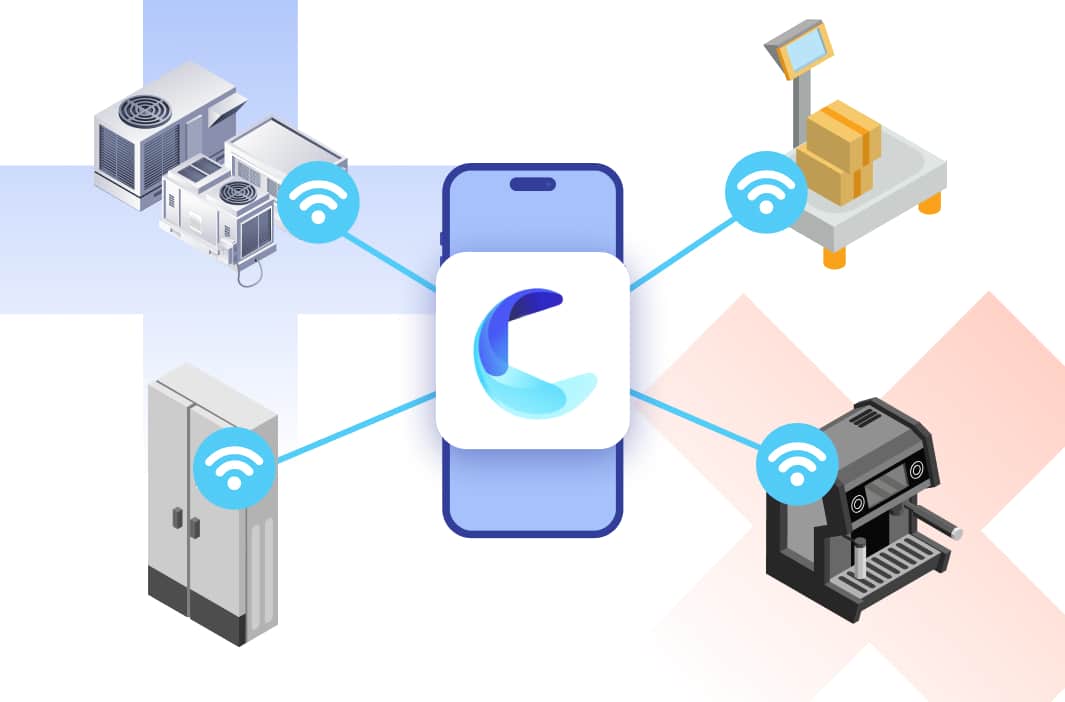
The promise of the Internet of Things (IoT) is enticing. Every commercial fridge, HVAC unit or coffee machine can flag its own maintenance needs, monitor its energy consumption, and make repair vs. replace decisions simple. However, as facility and asset managers know, the transition to an entirely smart ecosystem isn’t always smooth. The benefits are exciting, but the reality of IoT often involves a steep learning curve and adequate investment of time and money.
The Pros of IoT-Enabled Assets

When IoT works well, it completely changes the way businesses operate. The benefits include:
- Predictive maintenance: IoT-enabled assets are able to preempt breakdowns based on data, moving maintenance from reactive to proactive.
- Process automation: Continuous, automated monitoring – like logging refrigeration temperatures – cuts out human error and guarantees compliance.
- Total visibility: IoT-connected assets allow businesses to accurately track uptime and see how much energy each individual asset is using so you can better identify inefficiencies.
The Cons of IoT-Enabled Assets

The benefits of IoT across your assets are clear. However, deploying IoT across a multi-site organisation has its hurdles, including:
- Technical complexity: As with any new technology, implementing different sensor hardware, integrating datastreams with a central platform and managing connectivity drops can be a challenge for internal IT and operational teams. Rolling-out IoT devices alongside an asset management system must be carefully planned out and supported by experts.
- Upfront costs: Retrofitting existing equipment with IoT sensors or procuring brand new smart equipment comes at a cost. While the payoff can be priceless, the initial investment must be carefully considered.
- Data actionability: With so much data on hand, without building the appropriate workflows to action the trends and issues your data raises, all you are left with is noise. A sensor telling you a machine is overheating doesn’t help if the alert is going to an unmonitored inbox.
How mendrhub helps bridge the gap
You shouldn’t need to choose between your existing manual operations and an expensive equipment overhaul. Regardless of where your business is at on your IoT journey, asset management software like mendrhub acts as an intelligent layer to optimise your operations.
If you DON’T have connected devices
Even without IoT-enabled assets, mendrhub can help fill the data gaps that IoT normally addresses, like:
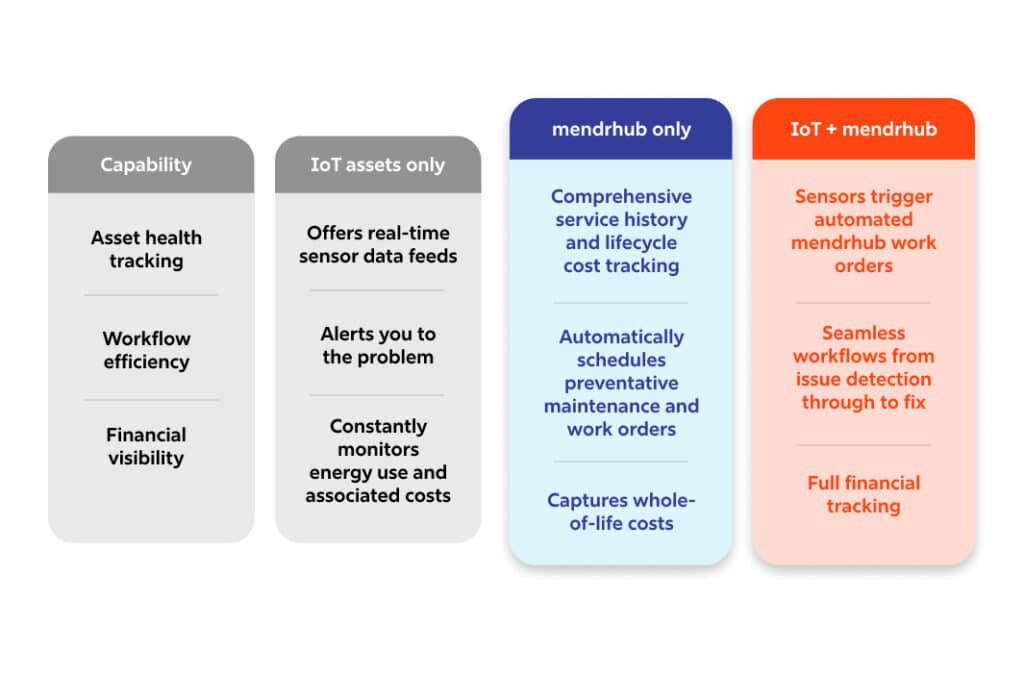
- Whole-of-life costs: By tracking an asset from purchase to decommission, mendrhub gives you total clarity over equipment ROI.
- Data transparency: Get a complete, digital audit trail of everything from service histories to logistics movements across every location.
- Automated workflows: From preventative maintenance scheduling and smart system alerts to automated job offers, mendrhub allows you to automate workflows regardless of IoT capabilities.
If you DO have connected devices
With IoT assets in place, mendrhub helps solve two of IoT’s biggest cons – by minimising technical complexity and actioning your data. As a partner, mendrhub will provide full support, helping you integrate your IoT datastreams into your central mendrhub web portal. Once integrated, mendrhub can automate workflows and notifications so in the event that an IoT device triggers an alert (e.g. a refrigeration temperature drop) mendrhub can take that data and create a work order, instantly sending it to the right technician or alerting the right manager. In addition, long-term trends across your assets and sites can not just be monitored and reported on but also visualised using the power of embedded and drillable Power BI dashboards.
IoT vs. mendrhub: What does it look like in practice?
To wrap up
You don’t need to replace every unit of equipment immediately in order to start creating a more data-driven way of working. Whether you choose to implement IoT, an asset management system, or both, you can still access the benefits of workflow automation, improved data transparency and actionable alerts. The first step is understanding your business’ existing capabilities and needs – then taking it from there.